

Distorted Time
What the Cycle of Economy, Education and Employment Distorts in Our Lives — A One Living System reflection on time, rhythm and the Life we are told to spend.

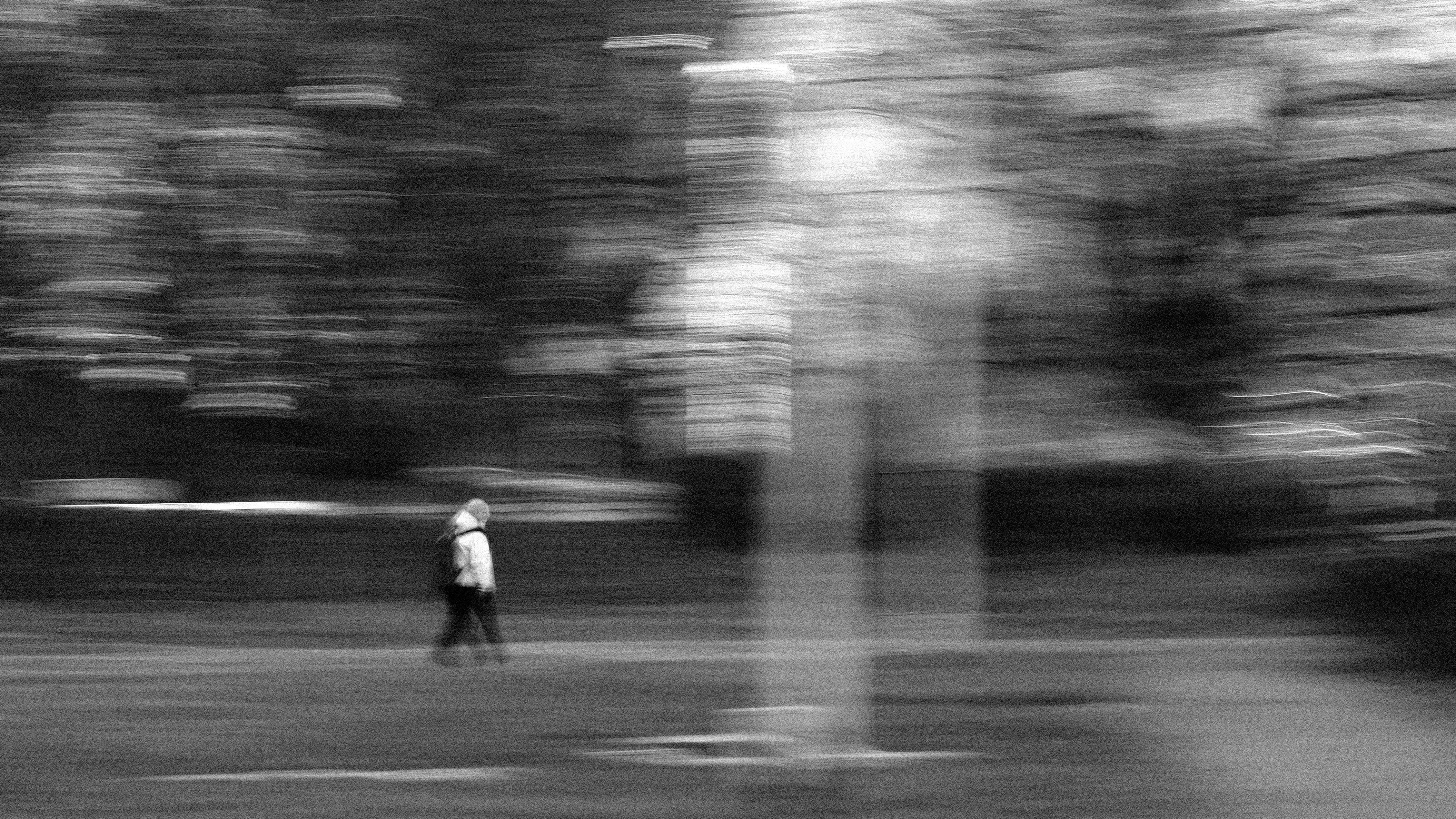
Before we move from employment into separation and loneliness, we need to pause with time.
Because by the end of education, and by the time we enter employment, many of us have already lost touch with any real sense of time.
Not clock time.
We know clock time well.
We know alarms, bells, rosters, deadlines, shifts, bills, appointments, school terms, work hours, due dates, productivity, ageing, retirement, and the quiet pressure of always being either early, late, behind, or running out.
But that is not the only time there is.
It is the time that has been educated into us.
It is the time that tells the child when to sit, when to speak, when to stop playing, when to move to the next lesson, when they are ready, when they are behind, when they should know, when they should choose, and when they should become useful.
It is the time that tells the worker when to wake, when to leave, when to clock on, when to eat, when to rest, when to return, when to be available, and when the best hours of the day no longer belong to them.
It is the time that tells the adult life is a line.
Birth... School... Work... Debt... Retirement... Decline... Death!
And somewhere inside this line, Life begins to feel smaller than it is.
One Living System asks us to remember that time is not only something outside us.
Time is lived into us.
We carry it in breath, hunger, sleep, grief, healing, childhood, blood, memory, longing, readiness, exhaustion, ripening, and return.
We know time through the body before we know it through the clock.
We know it through dawn and dusk.
Through the moon and tides.
Through the seasons.
Through the slow readiness of fruit.
Through the wound that closes in its own rhythm.
Through the child who becomes when the conditions are right.
Through the elder whose pace asks the world to slow down enough to listen.
This is our original alignment.
Life’s timing is already within us.
But man-made time is trained into us.
It is repeated until we obey it before we feel ourselves.
Wake now.
Hurry now.
Produce now.
Decide now.
Move now.
Stop now.
Begin again now.
Be useful now.
Do not waste time.
Do not fall behind.
Do not take too long.
And once this time is inside us, we begin to mistake it for truth.
We begin to believe the body is wrong when it needs rest.
The child is wrong when they need more time.
The grief is wrong when it continues.
The healing is wrong when it is slow.
The elder is wrong when they no longer move at the speed of the economy.
The relationship is wrong when it cannot fit into the calendar.
The self is wrong when becoming does not happen on schedule.
This is the wound of distorted time.
It does not only organise our days.
It organises our sense of self.
It teaches us to measure life against an artificial pace, then blame ourselves when Life refuses to move that way.
In the One Living System book, I write that time has become one of the ways we are captured from our place amongst nature and moved toward governed life. To remove, change, or alter our connection to time allows coercion, strengthens separation, and encourages obedience.
Because whoever controls time controls movement.
Who rests.
Who works.
Who gathers.
Who cares.
Who can wait.
Who must rush.
Who has time to heal.
Who has time to raise children.
Who has time to sit with elders.
Who has time to belong.
And this is where economy, education and employment become one pattern.
Economy teaches us that time is money.
Education teaches us that time is progress.
Employment teaches us that time is productivity.
Together, they teach us to spend our lives before we have ever fully lived them.
They teach us to trade the best hours of the body for survival. To move through childhood by schedule, adulthood by obligation, and ageing by the fear that time is running out.
But Life does not move only in straight lines.
Life moves in cycles. Inhale and exhale. Dawn and dusk. Seed and fruit. Summer and winter. Birth and death. Compost and return.
Life has urgency, yes.
But it also has patience.
It knows when to act and when to wait.
It knows that right action belongs to right timing.
It knows the seed cannot be bullied into sprouting, the wound cannot be forced into healing, the child cannot be standardised into becoming, and the body cannot be endlessly overridden without consequence.
Distorted time teaches us to override our own sense of time.
To ignore the body.
To eat quickly.
To sleep too little.
To schedule grief.
To commodify care.
To rush healing.
To measure childhood.
To taunt rest as laziness.
To treat slowness as failure.
And then, after long days inside this system, even daylight is adjusted by human hand so productivity feels more bearable.
We change the clock and call it more light.
We are taught to celebrate a little manufactured evening at the end of a long workday, as though changing the clock has given us more Life.
But the sun has not changed.
Only the clock has.
And this reveals that,
A society that must rearrange daylight around work has already confessed that the rhythm is wrong.
This distorted rhythm shapes our ageing too.
When life is understood as a straight line, ageing becomes decline. Elders become those who have moved beyond productivity. Care becomes something to fit between shifts, rosters, bills, distance, exhaustion, and the lack of time everyone is already holding.
Who has time to care?
Who has time to sit?
Who has time to visit?
Who has time to listen?
Who has time to love slowly?
Too often, the answer is no one. Not because people do not love.
But because time has been captured.
Families are busy surviving. Communities are thinned out. Care is outsourced. Children are scheduled. Workers are scheduled. Elders are scheduled. Grief is scheduled. Rest is scheduled. Even love is forced to find a gap.
And when love must always fit around the system, separation deepens.
This is why distorted time must be named before loneliness.
Because loneliness does not only come from being physically alone.
It comes from losing shared rhythm.
There is no village rhythm when everyone is moving to different clocks - in different houses - across the same land, different rosters, different deadlines, different pressures, different exhaustion.
There is no common breath. No slow time to gather. No unmeasured time to become known. No ordinary space where relationship can form without being scheduled, shortened, monetised, or interrupted.
The system tells us we are connected because we can message instantly.
But instant access is not the same as shared time.
A notification is not presence. A calendar invite is not belonging.
Efficiency is not intimacy. Availability is not relationship.
And speed is not Life.
One Living System does not ask us to reject clocks entirely.
Human life needs organisation. Communities need shared arrangements. Work, school, care and travel all require forms of coordination.
But clock time must serve Life.
It must not replace Life’s rhythm.
We can use time without being governed by its distortion. We can organise without severing ourselves from the body. We can act with urgency without losing patience. We can honour the now without being trapped in panic.
Because time, in truth, is not something we own.
It is something we belong to.
It is the subtle thread within all things.
The breath of the Earth.
The inhale and exhale of Life.
This is deep time.
Deep time is the timing of Life allowed to move without being forced into the speed of the system.
And perhaps this is what we must remember before we ask why we are lonely.
We were first separated from rhythm - the body’s rhythm - the village rhythm.
Distorted time deepens separation because it teaches each of us to live inside a private schedule of survival.
But living time returns us to relationship.
Here is a place to stand.
That time is not only money, productivity, progress or age.
That childhood, healing, grief, rest, care, learning, elderhood, creativity, relationship and becoming all have timing that cannot be forced without consequence.
That no system should demand the best hours of people’s lives and leave only exhaustion for family, community, health, land, self and spirit.
That clock time may help us organise, but it must never become the master rhythm of Life.
That societies need shared time, slow time, care time, seasonal time, community time, unplanned and unmeasured time in order to remain whole.
That ageing should not be treated as expiry, nor care as an inconvenience in a world too busy to love slowly.
That the pace of the economy should not be allowed to define the pace of the body, the child, the elder, the soil, the river, or the soul.
Here is what I stand for.
A life where time returns to rhythm.
Where work, school, care and community are organised around the needs of living beings, not only the demands of productivity.
Where rest is not shameful.
Where slowness is not failure.
Where children are allowed to become in their own season.
Where healing is given time.
Where elders are held in the slow dignity of presence.
Where communities have enough shared rhythm to know one another.
Where urgency does not erase patience, and patience does not excuse inaction.
Where clock time serves Life.
And Life is once again allowed to breathe in its own timing.
Distorted time is lived into us until we forget our original rhythm.
But living time returns us to ourselves.
And when rhythm returns, belonging can begin again.
Adriana Forte Naili "is a cultural architect, futurist, philosopher, and writer dedicated to bringing the cyclical nature of women’s minds into collective awareness." I have heard her speak to how the time-structures of employers ignore that women have monthly cycles, and could be more productive overall (and live healthier lives) if these cycles were honored. Her substack: https://theclab.substack.com/
Wow! I love this, Cari! Such a beautiful, full of wisdom expression of something we all feel but cannot always express. I love "what you stand for." I dream of a world where it's everyone's manifesto too.