

People and Place
The Land, the People and the Food That Grows Between Them - A One Living System reflection on community, nourishment and the return to place

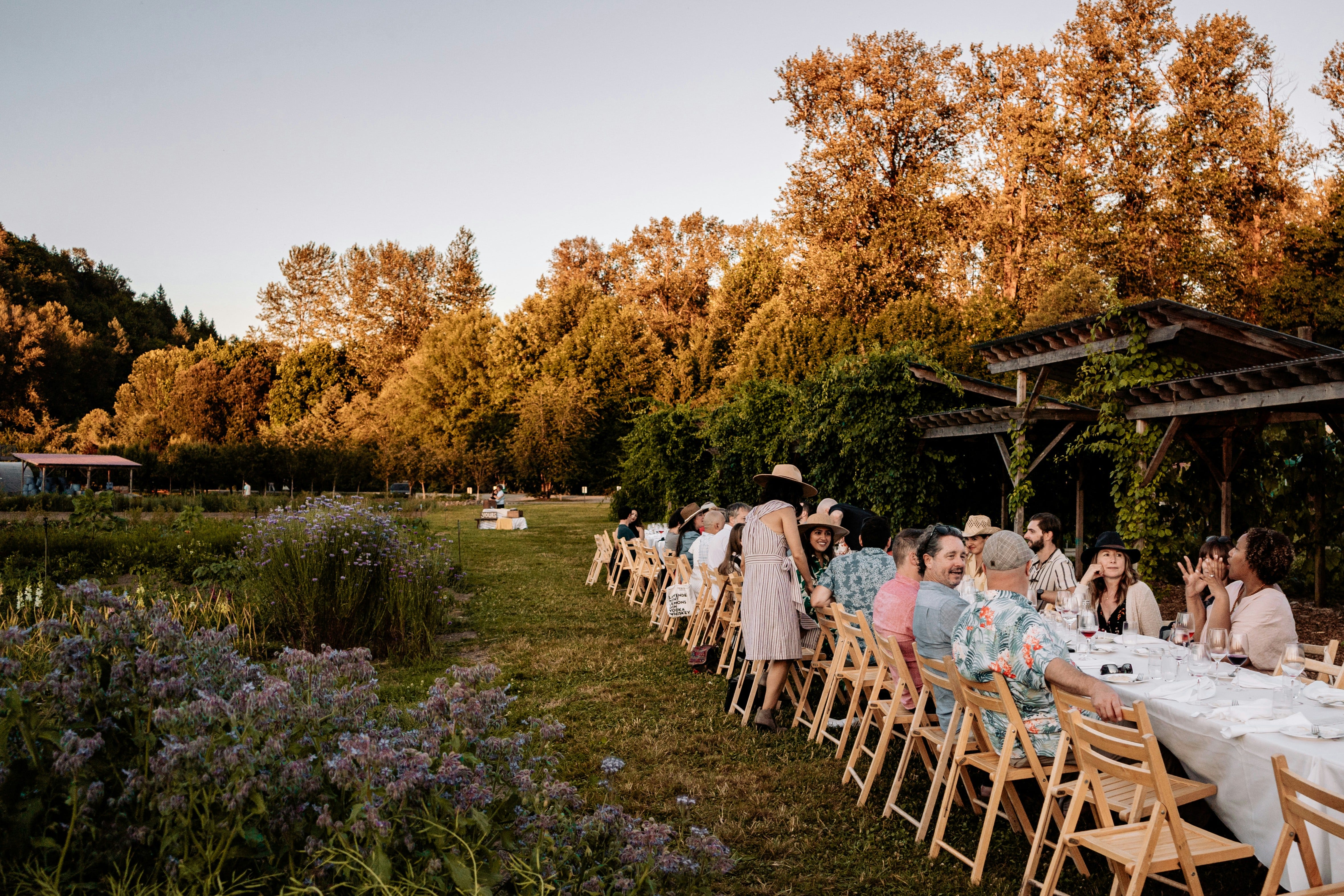
After separation, we must speak of people, place and all that grows between them.
Because when people are separated from one another, they are also separated from where they are. They no longer know who lives around them. They no longer know whose hands are tending the soil, whose stories are held in the street, whose memory lives in the water that flows through the creek, the field, the hill, the old tree, the neighbour’s fence, the empty block, the road that once followed water, or the land beneath the house.
We become strangers to each other.
And then we become strangers to place.
This is one of the deepest costs of separation.
Not only loneliness. Not only isolation. Not only the loss of community.
But the loss of knowing where we are, whose Country we are on, what history we are standing inside, and what living relationships have been severed beneath our feet.
When people are pitted against one another, community begins to fracture. We are taught to compete daily, hourly, quietly, constantly. For more. For better. For higher. For safer. For ownership. For security. For the small piece of ground we are told will finally make us steady.
But competition does not create community.
It creates defence.
It teaches us to build higher fences, close the gate, know our boundary more than our neighbour, see difference before similarity, and protect what is ours before we ask what belongs to the whole.
And once we live this way long enough, the land itself becomes divided in our minds. A block. A title. A property. A suburb. A paddock. A development. A resource. A view. A commodity. A thing owned.
But land does not live this way.
Land does not stop at the fence.
Water does not stop at the title boundary. Soil does not know the subdivision. Wind does not ask permission to move. Birds do not recognise property lines. Fire does not burn according to ownership. Roots do not grow only where paperwork allows.
Life moves across the whole as the whole.
And yet we have been trained to see only our part. Our yard. Our street. Our town. Our investment. Our farm. Our district. Our nation. Our side.
Like a game of chess, we watch only the pieces we believe belong to us. We know what our players are doing, but we no longer see the board itself.
This is not how land works.
Land works in relationship. It works through catchment, corridor, soil, seed, mycelium, rainfall, drought, fire, animal, insect, migration, memory and return. It works through what happens beyond our fence as much as what happens inside it.
This is one reason it becomes so difficult for people to see the full truth of ecological change. We cannot see over our own fences. We do not always know that water is no longer plentiful in the next town, that the dry has turned another landscape toward dust, that the creek has stopped running, the farm no longer yields, the wetland has been drained, the old growth cleared, the soil thinned, the heat gathered differently across Country.
Our cordoned-off block becomes the measure of reality.
And the whole disappears.
But One Living System asks us to look beyond the fence.
Place is never isolated.
Place is relational.
Place is historical.
Place is ecological.
Place is cultural.
Place is ancestral.
Place is the living memory of what has happened there, and what is still trying to become.
When we lose connection to place, we do not only lose land. We lose the story beneath our feet: the old names, the old tracks, the old waters, the old fires, the old foods, the old agreements, the old wounds, the old responsibilities.
We forget that history is not behind us.
It is under us.
It moves through us.
It shapes the present whether we know it or not.
A whole nation’s history lives in the ground people stand upon. If we do not know that history beyond our own front gate, we cannot understand what is happening to us now. We cannot understand why some communities carry more grief, why some lands carry more extraction, why some rivers carry more silence, why some people are displaced inside the very places their ancestors knew, why some foods disappeared, why some ceremonies were interrupted, and why some fences are not only fences, but the memory of removal.
Place holds all of this.
And when people are separated from place, truth becomes easier to hide.
Perhaps the most ordinary place where this separation becomes visible is food.
Because food is where land and people are meant to meet.
Food is the thing that joins us at the same table. It grows from soil, water, light, labour, season, seed and care, then enters the body and becomes life.
Food should be relationship made edible.
It should carry place into us. It should carry the work of hands, the memory of season, the story of soil, the gratitude of exchange, the care of preparation, and the simple truth that what feeds one life has already been held by many others.
But when people and place are separated, food becomes product.
We no longer grow together. We no longer prepare together. We no longer eat together. We no longer know the farmer, the soil, the water, the seed, the season, the distance travelled, the chemicals used, the hands that picked, packed, shipped, scanned, stacked and sold.
And once food becomes product, it can be treated as separate from hunger.
This is one of the deepest distortions.
Food can be grown, packaged, transported, marketed, displayed, discounted, thrown away, buried, wasted, and still people can go without eating.
The issue is not only whether there is enough food.
It is whether food still belongs to relationship.
Because in a living system, nourishment moves toward need. Abundance is shared. Excess returns. What is grown is not severed from those who hunger beside it.
But in a separated system, food can sit behind glass while someone outside is hungry. It can be locked in warehouses, priced beyond reach, discarded for not looking right, wrapped in plastic, placed in bins, or treated as loss within a business model before it is treated as nourishment withheld from Life.
This is not how food lives.
Food arrives through soil, water, light, labour, season, seed and care. It carries the work of many lives before it enters one body. When it is wasted while people are hungry, the wound is not only logistical.
It is relational.
It means the path between abundance and need has been broken.
Food arrives wrapped, branded, barcoded, transported, standardised and separated. Each portion enclosed. Each item packaged. Each life made individual. Even nourishment is divided into units.
Instead of a bowl of grain shared from one hand to another, we have plastic around plastic around plastic. We separate what has grown, consume it alone, discard what does not suit the market, and return the wrapping to the Earth asking her to compost what should never have been given back to her.
But Earth cannot compost our disconnection without our participation.
What needs composting now is not only waste.
It is the old beliefs.
The old frameworks.
The old separations.
The idea that people can belong without place. That land can be owned without relationship. That food can nourish without connection. That hunger can exist beside waste without revealing a broken pattern. That community can survive without shared life. That convenience is harmless. That fences protect us from the whole. That private survival is enough. That the Earth will absorb whatever we throw back at her.
These are the beliefs that must be broken down, turned over, exposed, returned, and composted into something that can feed Life again.
Because in a living system, people and place are not separate.
People belong to place.
Place shapes people.
Food grows between them.
Community forms around what is tended, harvested, prepared, shared, eaten, remembered and returned.
The garden is not only a garden. It is relationship. The kitchen is not only a kitchen. It is ceremony. The table is not only furniture. It is community infrastructure. The seed is not only future food. It is trust placed in time. The compost is not waste. It is the old returning itself to the new.
This is how Life teaches us to belong again.
Not through abstraction, but through tending. Through growing. Through knowing the names of things. Through watching the weather. Through meeting the neighbour. Through sharing what is abundant. Through asking what the land needs. Through remembering whose Country this is. Through learning what has happened here. Through eating in ways that reconnect us to soil, season, story, body and one another.
This is not nostalgia.
It is repair.
Because a community that knows its place becomes harder to divide. A people who know the land beneath them become harder to displace from truth. A neighbourhood that shares food becomes harder to isolate. A society that honours the relationship between land, people and nourishment becomes harder to sell back to itself as consumers.
One Living System asks us to return to the whole.
To see that the person next door is not separate from our wellbeing. That the water upstream is not separate from our body. That the soil outside town is not separate from our future. That the food on our plate is not separate from land, labour, climate, culture, economy, history and care.
What happens beyond the fence still belongs to us because we belong to the same living field.
Here is a place to stand.
That people and place must be returned to relationship.
That no society should waste food while people are hungry, because nourishment belongs to need before it belongs to profit, perfection, packaging or disposal.
That land is not only property, resource, investment, scenery or commodity, but a living field of memory, nourishment, responsibility and belonging.
That community cannot be rebuilt without place, and place cannot be healed without community.
That food should not be severed from soil, season, culture, labour, story, gratitude and shared life.
That fences, titles and markets may organise human ownership, but they do not define the movement of Life.
That ecological crisis cannot be understood from behind our own fence alone.
That the history of Country must be known, because no place is empty of memory.
That the waste we return to Earth is evidence of the separation we must now compost in ourselves.
Here is what I stand for.
A world where people know the place they live.
Where neighbours are not strangers.
Where land is tended as relation.
Where food is grown, prepared and shared in ways that restore community.
Where children know the names of local plants, waters, winds, soils, stories and seasons.
Where bellies are full as well as hearts.
Where history is not hidden beneath development.
Where Country is remembered as alive.
Where the table becomes a place of return.
Where what is abundant is shared.
Where what is wasted is questioned.
Where what has been separated is composted back into belonging.
Because when people are separated from place, food becomes product, land becomes property, and community becomes memory.
But when people and place return to one another, nourishment becomes relationship again.
And Life begins to grow between us.
I'm with you. Thank you for saying it so well.